
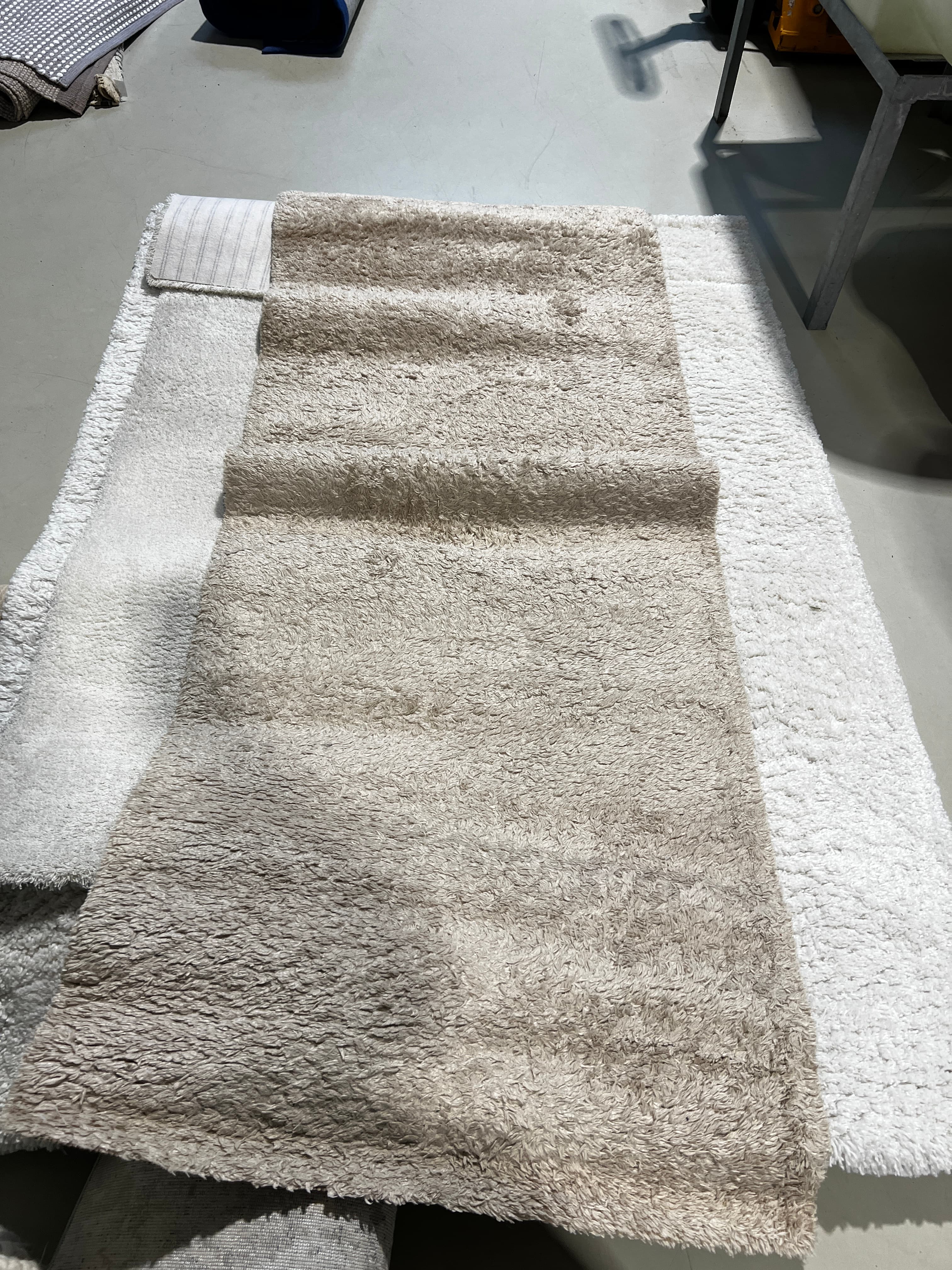
What you'll need
- Powerful vacuum with a rug attachment (not a rotating brush)
- Soft brush
- Mild detergent (wool wash if the rug is wool)
- Cold or lukewarm water
- Large dry towels
- Outdoor space or strong ventilation indoors
- 24 to 48 hours drying time
Shake it out, then vacuum
Take the rug outside and shake it firmly — don't do this indoors. Loose dirt, dust, and grit release best this way. Then vacuum both sides with an appropriate rug attachment. High-pile rugs need a rug tool, not a rotating brush head, which can catch and pull the fibres.
Check the material
High-pile rugs come in polyester, wool, cotton, and synthetic blends. Check the care label. Wool needs wool wash and cold water. Other materials usually tolerate mild detergent. The wrong detergent can settle deep in the pile and become extremely difficult to rinse out.
Wash in sections with minimal water
Don't submerge the whole rug in water unless you have a clear drying plan. Instead, work in sections: dampen one area, treat with detergent solution, rinse that section, and move on. This is slower but far more manageable.
Brush with the pile direction — never across it
Work the detergent in with a soft brush, always moving with the direction of the pile — never across it. Cross-direction scrubbing tangles the pile and leaves the surface uneven even after it dries.
Rinse very thoroughly
Detergent residue clings to long pile much more readily than to short pile. Rinse until the water runs completely clear. Residue dries stiff and makes the rug feel heavy and matted.
Press out excess water — don't wring
Press the rug with dry towels or walk across it with towels underneath. High-pile rugs absorb surprising amounts of water. The more you get out manually, the faster and safer the drying.
Dry with the pile free and airflow around it
The rug must dry with the pile able to extend upright — don't stack anything on it during drying. Outdoors in a breeze is the best option. Indoors, you need at minimum a fan and good ventilation. Allow 24 to 48 hours.
Drying is where most people run into trouble.
Watch out
- The pile must dry all the way through — including the backing. Residual moisture under the rug is a mould risk, especially if you put it back on the floor before it's completely dry.
- If the rug smells after washing, it isn't dry enough. Let it continue drying before putting it back in use.
- Don't vacuum a high-pile rug at maximum suction — it can pull out fibres.
Home washing
The washing is doable at home. Long pile absorbs a lot of water and the backing dries slowly. Indoors, 48 hours of moisture is a mould risk.
Mattonouto
Centrifuging removes water from the backing effectively. Drying time drops significantly — and your floor stays dry.