
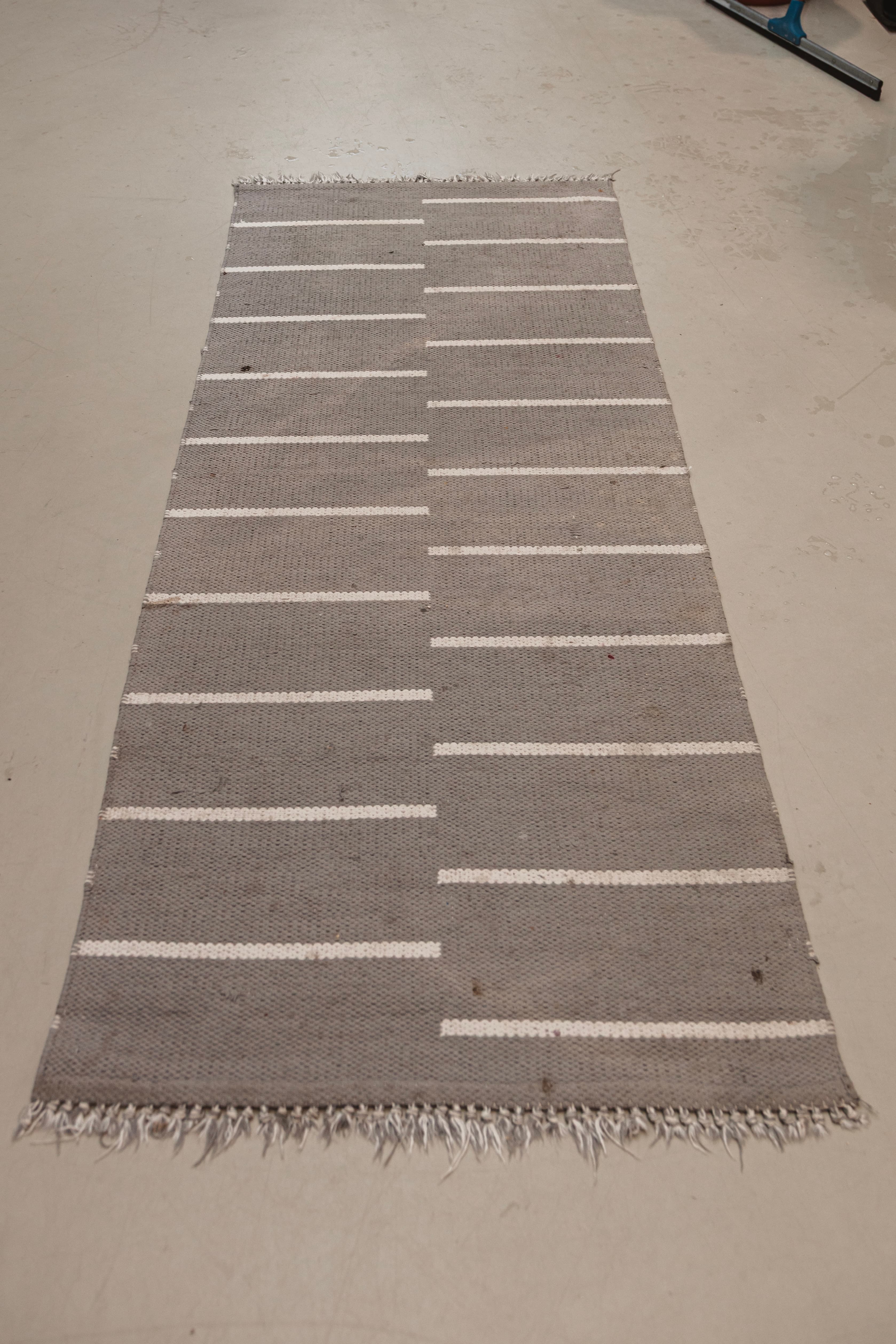
- Hot water
Causes wool to shrink and fibres to lock together
- Alkaline detergents
Chemically damage keratin fibres permanently
- Excessive scrubbing
Opens the fibre's scaly structure and makes the surface coarse
A wool carpet is one of the most durable and beautiful choices you can make for a home. Well maintained, a wool carpet can last decades — the fibres soften with use, it becomes part of the place. But the same quality that makes wool a remarkable material also makes it a particular one. You can't clean a wool carpet the same way you clean a synthetic rug.
Too much heat and it shrinks. The wrong cleaning product and the fibres break down. Inadequate drying and it starts to smell. These aren't theoretical risks — they happen regularly to wool carpets washed at home.
Why wool behaves differently
Wool is a natural fibre made from keratin — the same protein as your hair. That makes it unique in a washing situation.
Wool naturally repels liquid and dirt. The fibre has a scale-like structure, designed to keep dirt near the surface rather than absorbing it in. That's why a wool carpet often looks clean for longer — even when dirt has built up.
But that same structure makes wool sensitive to moisture and temperature:
- Hot water causes wool to shrink and fibres to lock together
- Alkaline cleaning products — like many common household cleaners — chemically damage keratin fibres
- Vigorous scrubbing opens the scale-like fibre structure and makes wool feel like paper
What home washing can do to wool carpets
Washing a wool carpet at home is possible — for small rugs and with care. But with larger carpets, there's more room for things to go wrong.
The most common mistake is the wrong cleaning product. Washing-up liquid, general-purpose cleaner, and machine detergents are often too alkaline or too strong. They can make wool fibres stiff, rough, or cause shrinkage.
The second common mistake is too much water. A large wet wool carpet weighs a significant amount. It's difficult to hang, hard to move, and if it doesn't dry properly the moisture stays inside. The result is a musty smell that's very hard to remove afterwards.
How should a wool carpet be cleaned?
The right method is gentle, pH-neutral washing in cool or cold water — not hot. The cleaning product should be specifically designed for wool or delicate fibres.
After washing, the carpet should dry on a flat surface in shade, with good airflow. No direct sunlight — UV light fades wool colours. No hot drying air and no tumble dryer.
A wet wool carpet shouldn't hang vertically — it's too heavy and the foundation can stretch out of shape.
When should you leave a wool carpet to a professional?
In practice, whenever the carpet is large or valuable.
A small wool rug you might try carefully yourself. But a large living room carpet in wool, or a hand-knotted wool piece, isn't worth the risk of washing at home if you want it to last.
At Mattonouto, wool carpets are washed using a method suited to them — the right temperature, the right product, controlled drying. Carpets are identified by material when they arrive, and the handling method is chosen accordingly.
Book a pickup for your wool carpet or see our pricing — let us know in the booking that it's a wool carpet.
How often should a wool carpet be cleaned?
Once a year is the right frequency for normal use. Wool naturally repels dirt, so it doesn't need cleaning as often as a synthetic rug — but dust builds up over time.
Regular light vacuuming (low suction, no rotating brush) keeps it presentable between cleans.
A well-maintained wool carpet is an investment that lasts decades.
A well-cared-for wool carpet can last for decades.
Wool carpet
Moderate- Always use cold water — never hot
- pH-neutral wool wash is the only suitable detergent
- Dry flat in shade for 24–48 hours